

When Madelynn and I visited Japan for the first time, we had the opportunity to stay at a ryokan, a traditional Japanese inn. Beginning as a rest stop for weary travelers, ryokan evolved into the epitome of Japanese hospitality.
A night’s stay at a ryokan usually includes traditional multi-course meals for dinner and breakfast, known as kaiseki. Eat a kaiseki meal and you might find yourself wondering, “Perhaps I am the relative of a king of some distance land.” To complement these wonderful feasts, many ryokan have onsen (natural hot spring baths) on site. The combination makes for a wonderful experience. So it was inevitable that we find ourselves on the way to Nagoya to catch a train heading to Gero, a town famous for its hot springs and subsequently abundant ryokan.
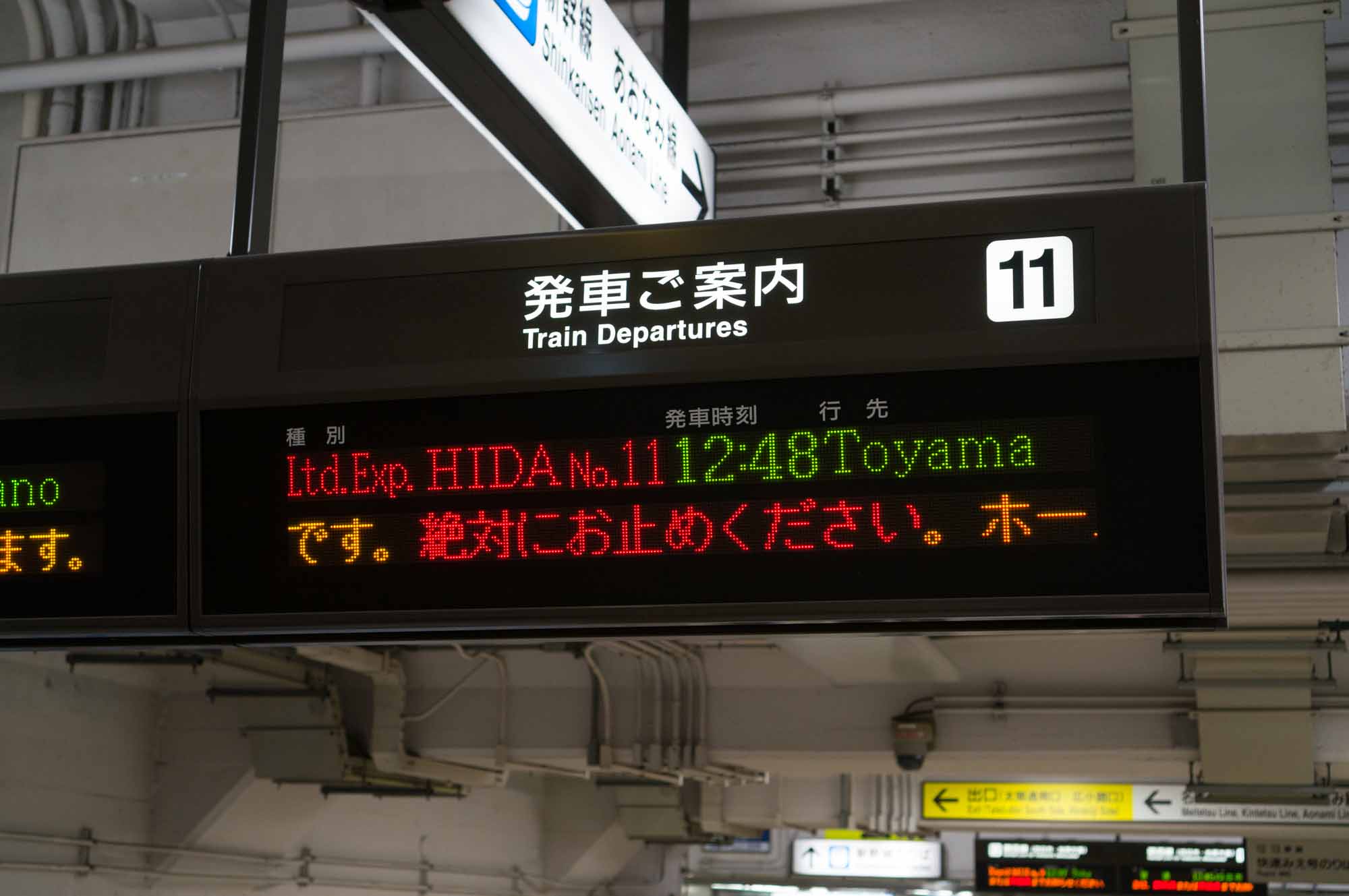


In Nagoya, we transfer trains to head inland. Although a little more expensive, the Hida Express is the quickest way to get to Gero by train. The wide-view train cars also provide a nice view of Gifu prefecture passing by. In the car with our seats, most of the other passengers belong to a tour group led by a single lady whom I have the utmost sympathy and respect for.


The control rooms on the Hida Express also have large windows to let passengers see out the front and back of the train. Sitting in seat numbers one and two, we get to see the driver do his thing as we leave Nagoya. This is actually the back of the train, but we move in reverse for a while until the train can switch tracks at a junction.


Time for some lunch. Some station platforms have stores selling bento to eat on the train. Usually, if your train offers reserved seating, you can buy a bento nearby.


We change directions and start heading into the mountains. Our driver clears out of the back and makes his way to the front of the train.


After a good while, we finally arrive at Gero station. There, a ryokan employee picks us up and takes us to the inn we booked.


We find a large, traditional Japanese room and a sampling of snacks waiting for us at Fugaku ryokan. One of the managers attends to us during check-in, speaking to us mostly in English, but he also allows us to practice our Japanese a little.


After listening to an explanation of the ins-and-outs of the ryokan, and getting recommendations on what to do while in Gero, we head out for a little exploration before the sun sets. Although a little cold, the town is pretty nice, with hot spring baths on almost every corner and even public foot baths.


While wandering the street, we happen upon a frog shrine. “Gero gero” is a Japanese onomatopoeia for the sound a frog makes, so the town of Gero has collected a lot of frog memorabilia. This frog shrine is no exception: frog lanterns, frog fountain, frog stone idol, frog sculptures, and frog pavement.


We walk up the 173 steps to Onsen-ji temple for a view of the town and surrounding mountains.
Long ago a large earthquake caused the hot springs to cease in Gero. But a white heron led the villagers to the redirected source of the springs. There the villagers saw an image of Buddha, so they erected Onsen-ji temple in honor of the divinity.


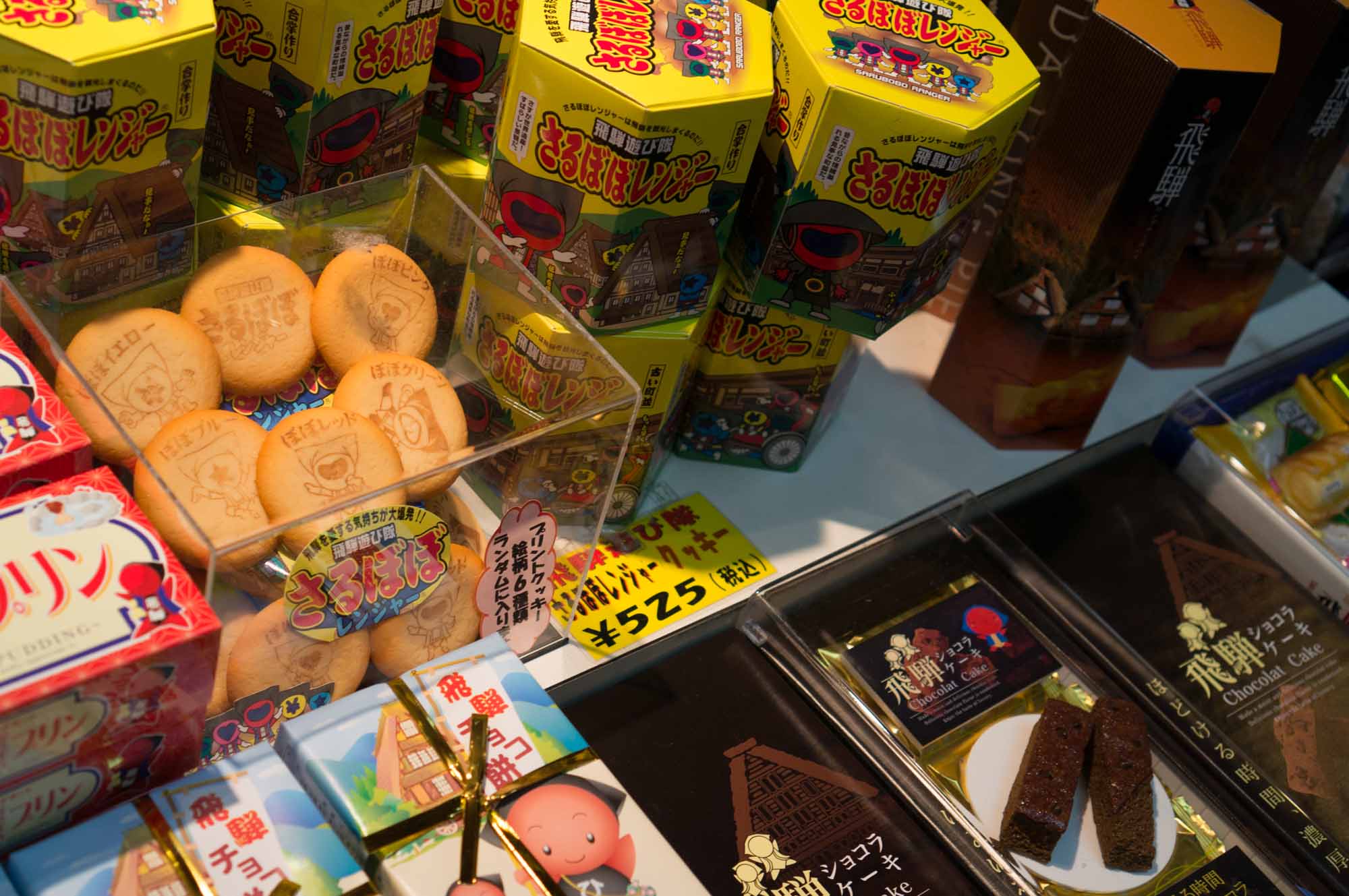


Heading back into town, we check some of the gift shops lining the main street. Aside from Gero frogs, the regional mascot Sarubobo has its own merchandise for sale, including snazzy underwear. Sarubobo means monkey baby, and charms in its likeness ensure happy marriage and smooth baby delivery.

One shop even stocks a local micro-brew beer.


Crossing the Hida river we get a different perspective of Gero. By the bridge is a free open air hot spring. While the ryokan staff recommends swimsuits since it’s in plain view, they also warned that old men going to the bath don’t really care who sees them.


A couple more gift shops with various local products, from frog cookies to homemade ketchup. Apparently the Hida region is known for their tomatoes.
As dusk rolls in, we return to our room to relax a bit and get ready for dinner.


And now the main event! A delicious meal fit for a king and his queen. Every dish is excellent, with a variety of flavors to boot. Thirty minutes later and there is still so much food to be eaten, but I am already full. I don’t know how people can finish all of this in one sitting.
After dinner, we have a private bath reservation. The private bath consists of a large tub filled with what I assume is water directly from the center of the earth. Now I know how a lobster feels.
Once done cooling off in our room, we do as the Japanese do and head to the baths again for another round. Fugaku has baths on both the bottom floor and top floor. And the bath assignments for men and women rotate regularly, so pay attention. So one last dip in the hot springs, then it’s time to sleep.


The next morning, round two begins with a breakfast of champions. Again, how do people eat all of this? Breakfast is a mix of western and Japanese offerings, with eggs and ham paired with things like grilled fish. An interesting mix that works pretty well.


With breakfast finished, the ryokan staff kindly take us to our last stop in Gero, Gassho village. A large complex of thatched hut houses contain a museum and other neat things, like a pigeon coop. The village also has an enormous slide on the side of a hill, but the cold wind keeps me away.


The low temperatures also keep this water wheel from spinning, but the ducks and fish don’t seem to mind.


The beautiful thatched roofs have quite a presence to them, and the view from the village is pretty spectacular as well.


The museum displays contain antiques and crafts from bygone eras.


Offering some relief from the cold, the on-site foot bath is available, for a price.


So we use the free hand bath instead. We call a taxi and ride back down to the station to catch our train back home.

Everyone crowds inside the station to stay warm while waiting for the train. With a plethora of ryokan and onsen, it’s no wonder so many people make the journey to Gero. I know we will be back someday.